
By Benoît Poelvoorde's own account, Chaland was an inspiration to the actor. He also left a lasting impression on comics creators such as Ted Benoit, Serge Clerc, Frank Margerin, Floc'h, Charles Berberian, and Yann Le Pennetier, with whom he worked on three albums in The Adventures of Freddy Lombard. Thirty-six years after his tragic death in a road accident, his hometown of Nérac still holds annual gatherings in his honor.
In Avril Tembouret's 2018 documentary The Chaland Enigma1, Zep declares that « everything about Chaland is perfect: every drawing, every strip ». Yet several interviewees also describe a kind of enigma, something in Chaland's work that remains beyond (or resists) understanding.
Chaland created something fundamentally unique. Beneath the familiar surface of Franco-Belgian comics, his work is constantly off-kilter: at times darkly ironic, at others an immense poetic explosion; his world can be delirious, merciless, even cruel, as brilliantly parodic as it is often raw.
Just read Bob Fish, published in Métal Hurlant in 1980,2 to grasp Yves Chaland's singular tone and the force of his work. Perhaps it is this elusiveness—how difficult it is to place his work in any one genre—that both fuels today's admiration and explains his comparatively modest profile, and underestimation, among the wider public.
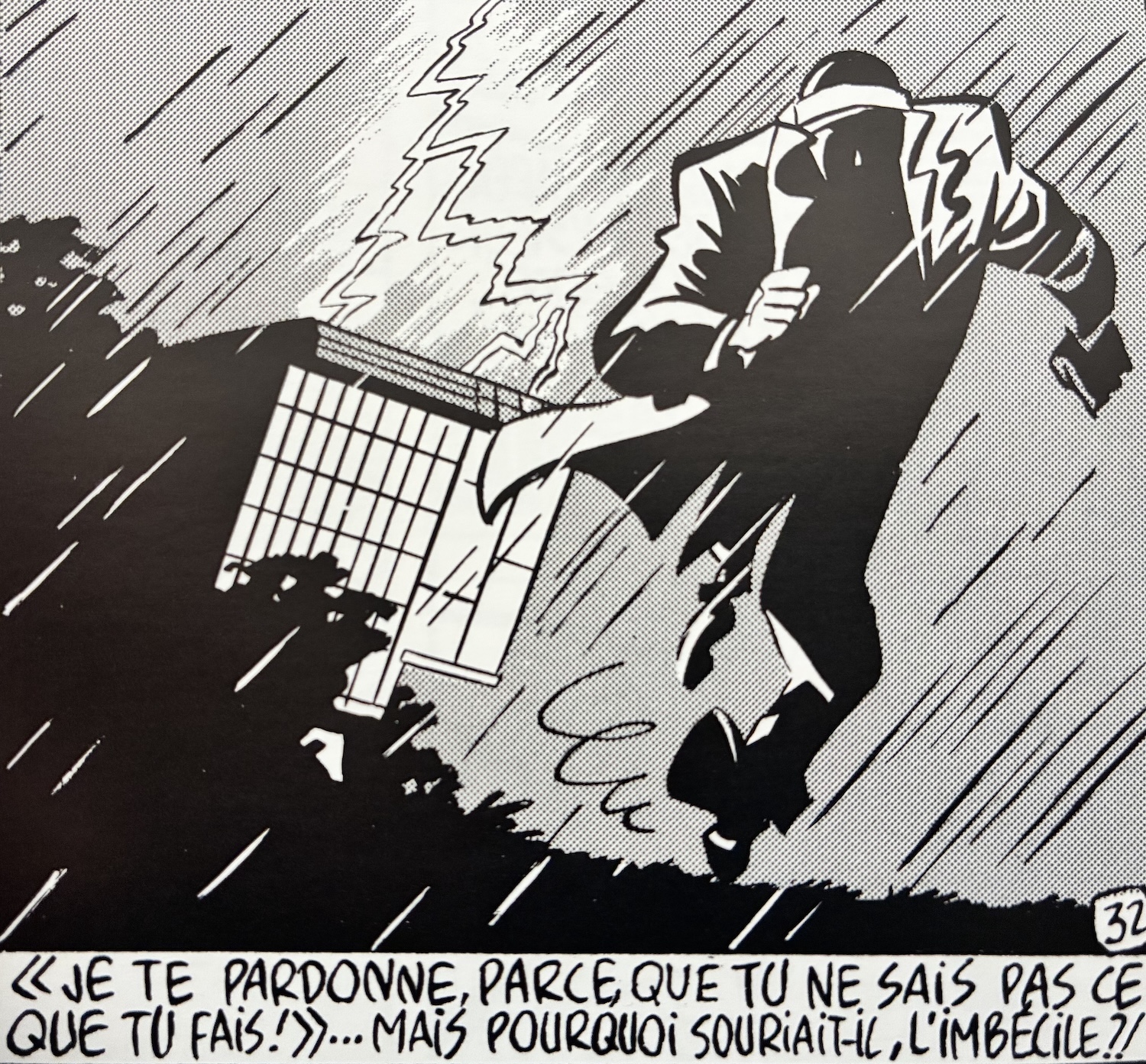
Mistreating the reader?
Indeed, Chaland was a great draftsman. His line is assured, self-evident, and beautiful; it belongs to the clear-line tradition, but is closer to the « atom style » of Spirou in the 1940s and 1950s (Franquin, Jijé) than to Hergé or Edgar P. Jacobs. And yet, in a letter to Hanko Kolk dated September 18, 1985, he writes: « In my view, you have to mistreat the reader (...) You have to demand the reader's full attention. (...) You have to do the opposite of everyone else and invent the rules of a new style. » His signature character, Freddy Lombard, is no saint or genius; in some respects, he is a downright scoundrel. In The Elephant's Cemetery, the white lettering on a black background and Kalloch's tragic fate make the story all the more striking.
In The Carthage Comet (1986), co-written with Yann Lepennetier and colored by Chaland's wife, Isabelle Beaumenay-Joannet, an album unlike anything else, a deep sense of melancholy, even sadness, gradually emerges. There is a strangeness that the opening pages give no hint of, as the story initially seems to be a romantic detective tale. « Just tell them it's what Pariscope would call a psychological drama », Chaland said in Métal Hurlant in July 1985.
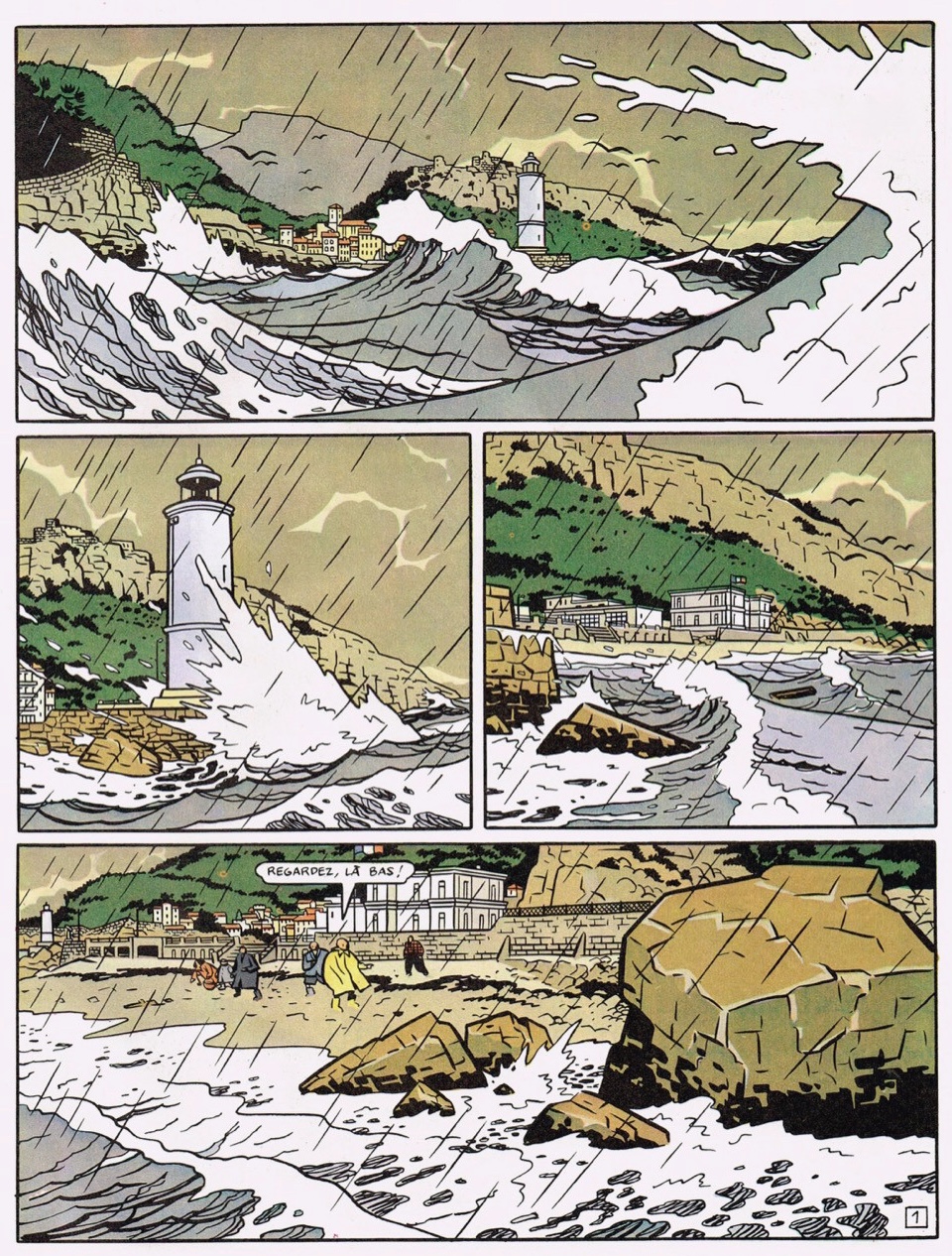
« The plot thickens: no one believes the genius creator. What will happen next? »Yves Chaland
F52, made three years later with the same team, takes Chaland's style even further. Both playful and dark, it begins like a light-hearted farce, then unfolds the characters' selfishness and treachery until they become deeply unsettling. It is hard to be prepared for F52: an extreme drama with a somewhat reassuring ending that nonetheless passes through every abyss of the human soul. Its violence is primarily psychological.
The story's lighthearted adventure format and bright colors contrast with the way childhood, disability, and justice are first violated by the plot and its characters, then restored—without leaving the reader satisfied or at ease. F52 ends with a murder (Greta's, albeit an unintentional one) and a suicide; more shocking than this ending is the survivors' indifference. Here, as in several of his works, Chaland writes about greed, violence, and racism. His art cannot be reduced to the entertainment its style might suggest.
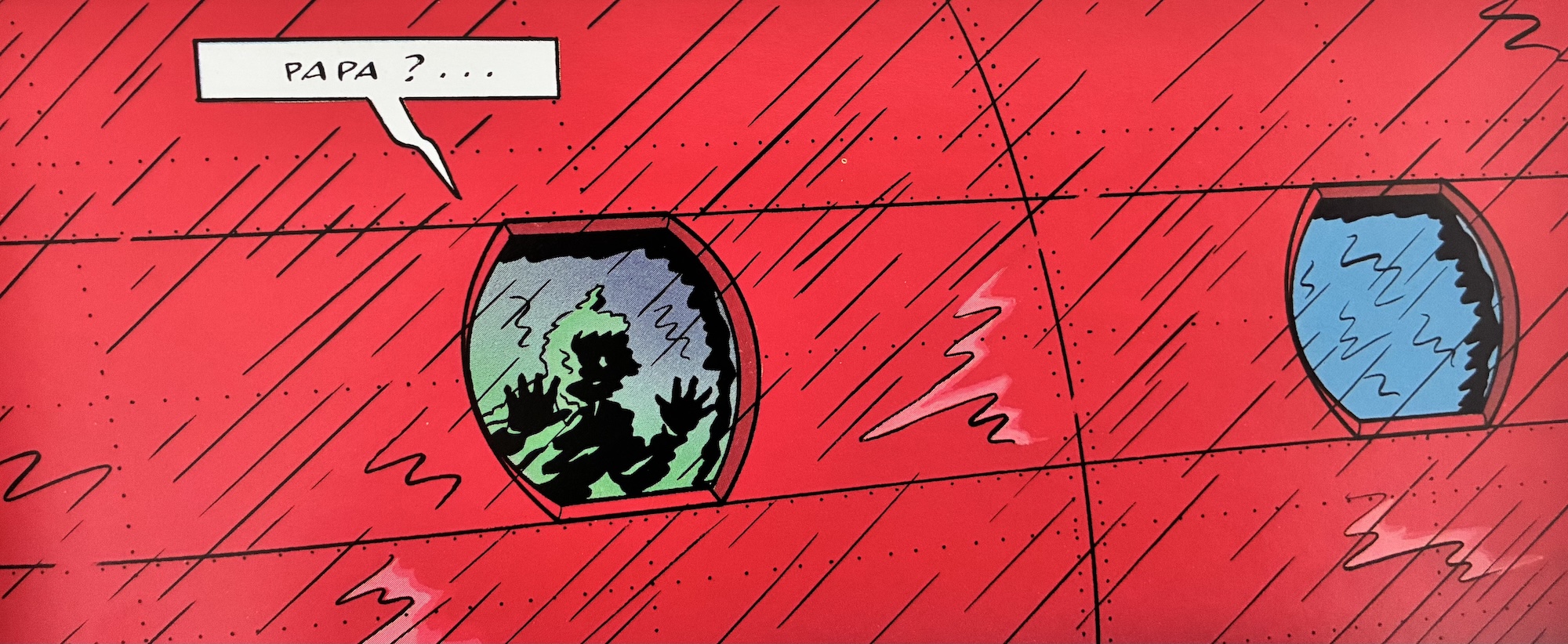
It is worth noting that Chaland and Lepennetier set cynical capitalists and boorish working-class passengers against each other in F52, which is divided into two levels: the truly squalid economy class and the indecently wealthy super-luxury class. Neither side behaves any better than the other.
A pessimistic humanism
In Leitmotiv in 1986, Chaland declared: « Readers have to make an effort, and too bad for them if they don't. I couldn't care less. » But Chaland was no cynic. In 1982, in the magazine PLGPPUR, he described his own trajectory: « My goal isn't really comics; the ultimate subject of my work is my biography. I always work with that in mind. I love biographies. The good ones: the early hardships, the hard struggle in a miserable garret, then the revolutionary discovery—but the plot thickens: no one believes the genius creator. What will happen next? » His pessimistic humanism is tinged with romanticism and a sense of wonder. Chaland may have wanted « the reader to feel at all times that the author is in charge » (letter to Hanko Kolk, 1985), but that does not make him manipulative in his stories.
Yves Chaland would never complete his biography. Born in Lyon on April 3, 1957, he died on July 18, 1990, at just 33. But, to quote The Two Lives of Basil Wolverton (1978, drawn in a realistic style—Chaland could do it all): « I had succeeded! I was alive again! »
◆
Chaland's works have been collected in a four-volume edition (Les Humanoïdes Associés) ↩︎