
Comics: childish, simplistic, limited? Despite their privileged status in France, where they enjoy significant media recognition and unusually strong distribution, few people outside intellectual circles would call them an art form in their own right, rather than a hybrid genre borrowing from both painting and literature.
We often hear remarks like « this film feels very much like a comic » or « he looks like a comic-book character ». Sometimes almost imperceptibly, comics are thereby reduced to their most limiting associations.
And yet comics are called the « ninth art ». Even when reduced to entertainment, they are among the least passive media, allowing a wide range of narrative techniques to unfold in ways that feel natural to the reader. Comics are inherently creative, and those who make them know just how much work they require.
The power of closure
Reading comics requires far more attention than we might think. It may seem simple at first, since our culture is highly attuned to symbols (and panels are among the first symbols comics use). But the visual coordination involved, comics' distinctive representation of time (which creates an illusion of simultaneity), and what Scott McCloud calls closure—the mental process by which we reconstruct the « gap » between two panels—make reading comics more involving than it may seem. For Marshall McLuhan, author of Understanding Media, only two popular media engage their audiences through symbols and iconic representation: television and comics.
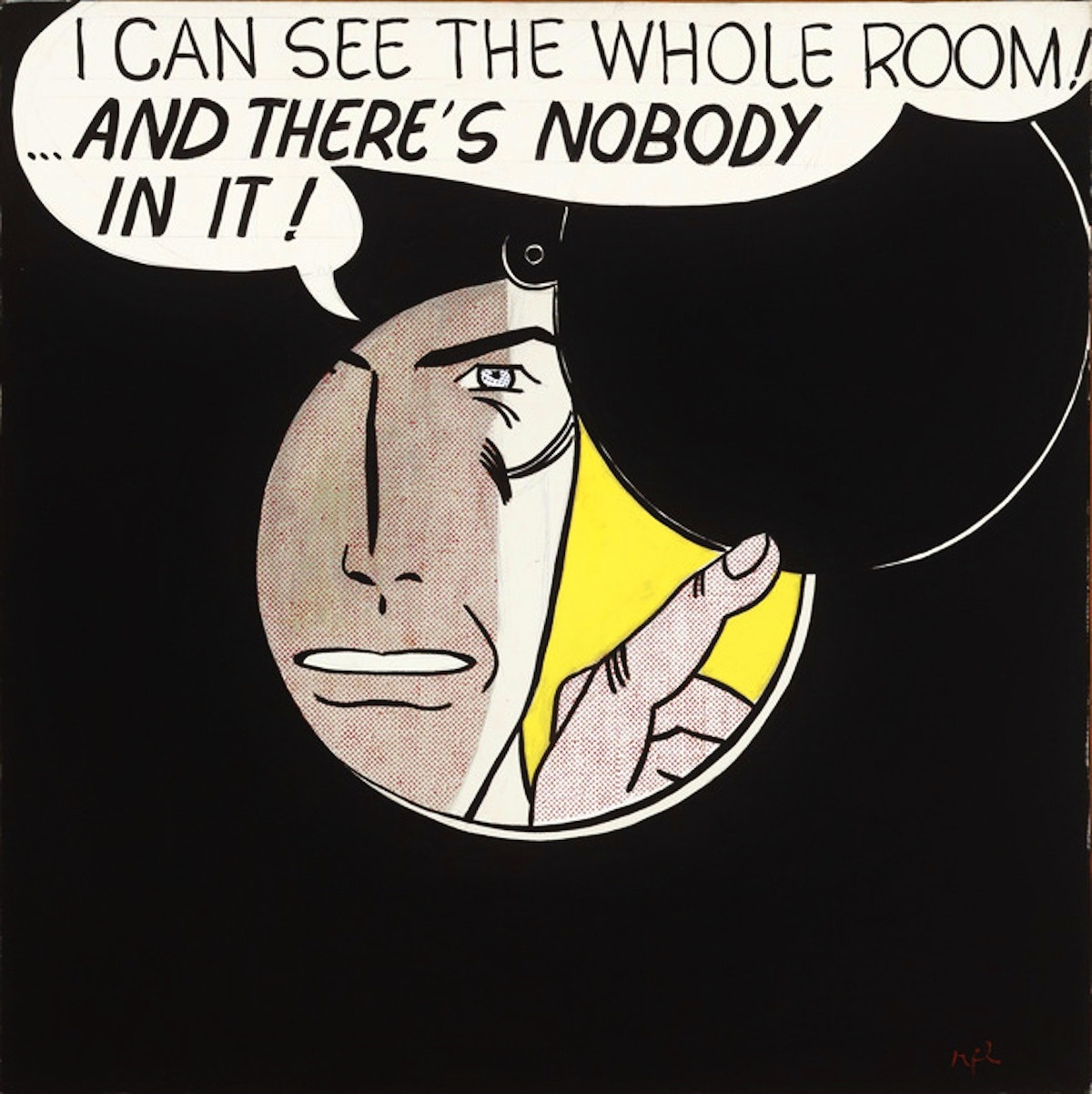
The particular cultural standing of comics has also made them a source for other media to draw on, to an extraordinary degree compared with other art forms. Film and animation constantly borrow from comics: from Batman to The Simpsons, The Avengers to Teenage Mutant Ninja Turtles, Fritz the Cat to Blue Is the Warmest Color. Even painting has adopted its visual language, as in the work of Roy Lichtenstein.
Comics creators have the entire visual iconography, as well as the worlds of symbol and language, at their disposal. Scott McCloud writes: « Throughout its history, comics has mastered the power of cartooning to engage readers and invite identification, and the power of realism to convey the beauty and complexity of the visible world. The dance of the visible and the invisible lies at the heart of comics, made possible by the reader's ability to reconstruct the connection between panels. »
Medium or object?
At the same time, American comics still struggle to shake off the mythology of the superhero. Yet in the United States, Europe, and of course Japan, comics thrive as an art form. The emergence of the term « graphic novel » over the past fifty years reflects a shift in perception. The first work to be (self-)labelled a graphic novel was Will Eisner's A Contract with God (1978)1. Ironically, the term omits the word « book », even though « comic book » includes it—and the format itself is nothing like a book.
Books and comics differ not only in format and nature, but also in how they are used. Writer and publisher Darcy Sullivan identifies seven distinctions2:
- Comics are more like « objects »; books are more like « experiences »;
- Comics are seen as superficial, books as profound;
- Comics are collectibles; books generally are not;
- Comics are made to be consumed, books to be kept;
- Comics are an expensive form of entertainment; books are not;
- Comics are tied to their time, while books are generally timeless;
- Comics are fragments; books are wholes.
The emergence of the graphic novel is therefore far from incidental: it reflects a desire—subtle, as we have seen—to change how the comics medium is received by changing how the comics object is perceived. A direct comparison between a book and a comic may make little sense, but in the collective imagination, the comparison is made all the same.
In France in the 1980s, a number of unusually long comics appeared (the sacrosanct 48 pages—or sometimes 64—were still the norm). Examples include Bran Ruz by Auclair and Deschamps, La Belette by Comès, and Le Transperceneige by Lob and Rochette. Elsewhere, works such as Hugo Pratt's The Ballad of the Salt Sea (more than 160 pages, published in 1968—ten years before A Contract with God!), Alan Moore's Watchmen (more than 300 pages) and From Hell (more than 500), Gilbert Hernandez's Poison River, the collected volumes of Dave Sim's Cerebus, Bryan Talbot's The Adventures of Luther Arkwright and Tale of One Bad Rat, Howard Chaykin's work, and Japanese comics more broadly give action, characters, and emotions all the room they need.
These examples, all from the last century, were among the first major manifestations of comics as long-form storytelling. The list, of course, has grown considerably since then.
Critical perspectives
The ninth art has been examined in three kinds of books: journalistic investigations and academic studies (including Roger Sabin's Adult Comics: An Introduction, published in 1993); books on the techniques of drawing comics (by Tarzan artist Burne Hogarth and many others); and works that reflect more specifically on the mechanisms at work in comics.
Curiously, the three major works in this last category were written by comics creators, not outsiders. They include Will Eisner's Comics and Sequential Art (1985; followed by Graphic Storytelling in 1996), Benoît Peeters's Case, Planche, Récit (1991), and, in particular, Scott McCloud's Understanding Comics (1993), followed by Reinventing Comics (2000), which explores, among other things, the possibilities for distributing comics online. McCloud's book stands out both for the breadth of its argument and for the striking fact that it is itself a comic.
« Emphasize what comics alone, or almost alone, can bring into play: the panel, the strip, the page, the relationships between text and image »Benoît Peeters
Outside these landmark works, comics criticism was long notable for its absence. Before Les Cahiers de la Bande dessinée appeared in France in 1980 (the magazine would publish many texts later reprinted in Case, Planche, Récit) and The Comics Journal launched in the United States in 1976, no truly serious critical reflection had taken comics as its subject. This was so despite the support of intellectuals such as Federico Fellini, Alain Resnais, and Roland Topor, and despite a few notable texts, including those by Jules Feiffer or even Essai de physiognomonie (1845) by the Swiss Rodolphe Töpffer. Instead of critical writing, dictionaries, often hagiographic author bibliographies, and portfolios flourished, arguably holding back the cultural development of comics.
Comics and Sequential Art, which adapts and expands on the courses Eisner taught for several years at New York's School of Visual Arts, marked a turning point. Eleven years later, with Graphic Storytelling, Eisner found the right words: « graphic storytelling » captures exactly what comics are at their core—a distinctive, irreducible alchemy of images and words.
In Case, Planche, Récit, Peeters offers a broad overview of comics and asserts the medium's distinctiveness. A specialist on Hergé and, with François Schuiten, co-creator of The Obscure Cities, he writes: « The point seems clear to me: even if line, color, or dialogue certainly deserve analysis, it is worth focusing on what comics alone, or almost alone, can bring into play: the panel, the strip, the page, the relationships between text and image, between script and its visual realization. »
Understanding Comics, the first essay in comic-book form, builds on these works and paved the way for other creators to use comics for nonfiction. Yet comics remain on uncertain ground. Challenged by digital media, like all forms originally dependent on print, and threatened in their legitimacy by controversies such as those that led to the cancellation of the 53rd Angoulême International Comics Festival in January 2026, the medium nevertheless seems resilient and has long proved capable of reaching every kind of audience. Wasn't one of the best-known French-language magazines devoted to auteur comics, published by Belgium's Casterman, called (À suivre)—« To be continued »?
◆
Will Eisner, creator of The Spirit, a series that was already an unparalleled field for visual experimentation in the 1940s, also defined comics as « sequential art ». Scott McCloud elaborated on that definition: « Juxtaposed pictorial and other images in deliberate sequence intended to convey information and/or to produce an aesthetic response in the viewer. » These definitions specify no materials, tools, printing methods, styles, or subjects: those are left to the creators, making comics both an inexpensive and exceptionally open art form. We will return to Eisner and McCloud later in this article. ↩︎
« More from the Moolahverse: The Case Against Bookstores » (The Comics Journal no. 178, July 1995) ↩︎