
Vittorio Giardino came to comics relatively late, in 1978 (he was born in 1946), after starting his career as an aeronautical engineer. It would take him another fifteen years or so to rise above the status he held in the 1980s, when many saw him as a skilled craftsman in the vein of Manara (for the soft eroticism), with a style influenced by ligne claire (for the well-defined outlines and flat areas of color).
Yet long before the publication of the first volume of Jonas Fink (1994 in France), which finally put him squarely on critics' radar, the Italian creator had already distinguished himself in many ways. In the album Vacances fatales (published in France by Casterman in 1991), for example, he delivers a series of short stories1 on the theme of romantic betrayal, set in holiday resorts around the world. Beyond the clear graphic maturity of his drawing, these cruel tales are trickier than they seem: there is much that happens off-panel despite the abundant nudity, there is sadness despite the perfect female bodies and faces, there is irony and a certain ambiguity, almost somewhere between dream and reality. A good distance, in a way. You have to read it to fully grasp the subtlety and delicacy of his approach, behind an apparent frontality.
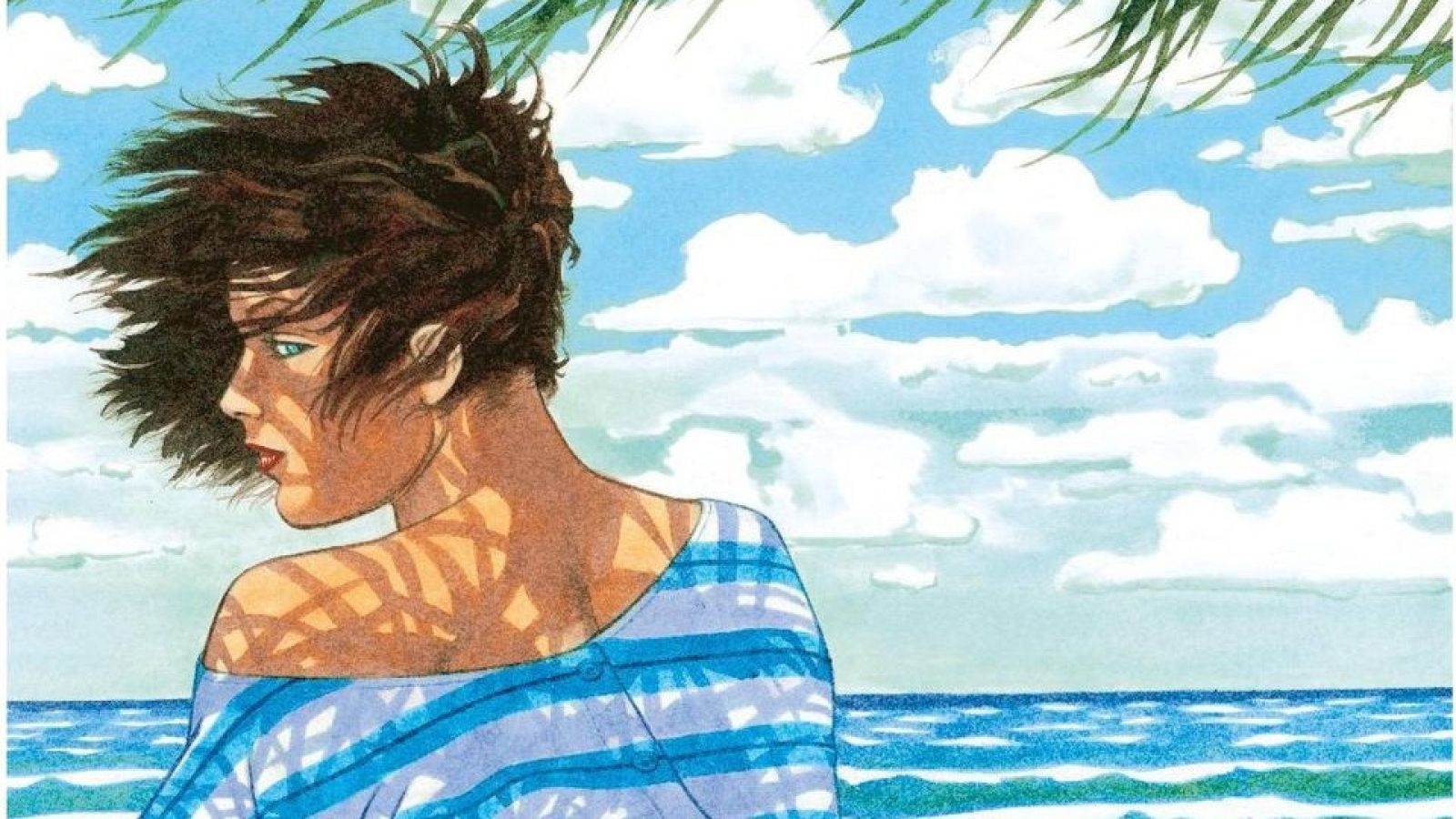
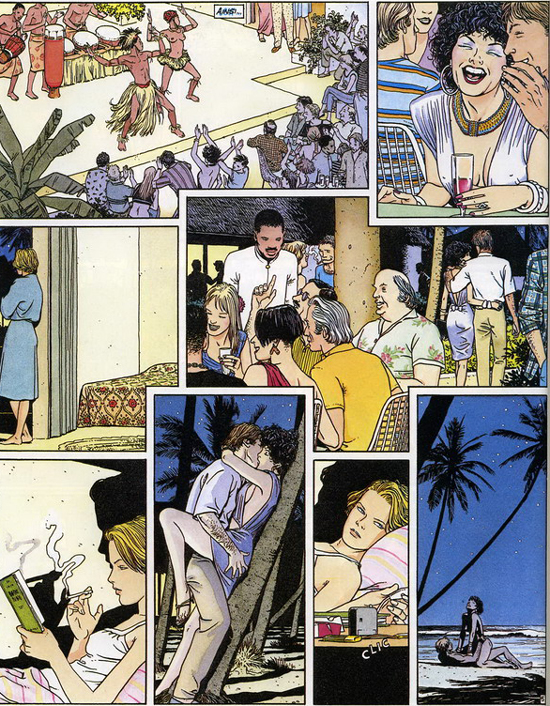
Black and pink
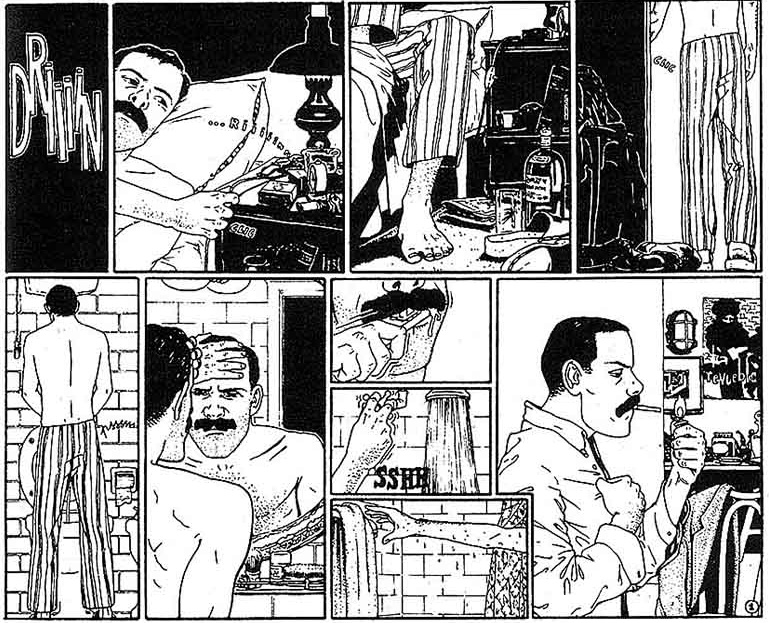
The author's first significant publication, in 1979 (1981 in France), is the series Les Enquêtes de Sam Pezzo. Paying homage to film noir and inspired by the series Alack Sinner by Carlos Sampayo and José Muñoz—though there is also something of both Hugo Pratt and Jacques Tardi in his line—he works in a highly contrasted black and white, and deploys, sometimes still clumsily, and in any case unevenly, his blend of detachment, fascination with women (the hero falls for every one of them), and political observation (light here, however). In 1983 (published in France by Glénat in 1989), with Little Ego, a sort of erotic pastiche of Winsor McCay's seminal Little Nemo in Slumberland, he asserts the elegance of his line and his creativity, even his sophistication, but the whole remains above all an exercise in style.
Contemporary history
The series Max Fridman (begun in 1982, published in France by Glénat, with volume 6 released in 2026) reveals his interest in contemporary history, the rigor of his research, and also his political commitment. Giardino says: « Like all fictional characters, Max Fridman is partly a reflection of his creator. We have things in common: we are both bearded, we both smoke a pipe, and we are both not very tall. Our political paths are also similar: we are on the left, but we have lost our political faith, without however renouncing our deepest convictions. The difference is that I did not experience the war »2. Giardino rejects totalitarianism, whether of the far right or the far left. While Max Fridman goes on to join the International Brigades during the Spanish Civil War, Giardino appears rather pacifist.
With Jonas Fink, a new series begun in 1991, Giardino tells of the hardships of childhood in communist Prague in the 1950s. The character, like Max Fridman, is a non-practicing Jew. Giardino is not, but his wife is, and Jewish identity is interwoven with the author's political message. Jonas Fink, along with volumes 3 and 4 of the Max Fridman series (published in France in 1999 and 2002 respectively), earned Giardino full recognition and cemented his place as a reference in Italian comics.
The author claims Kafka as an influence, and in Jonas Fink (Prague aside, of course) we find an atmosphere that is oppressive both politically and psychologically. Followed over many years, Jonas's life is that of a boy and then a man who learns about life under the pressure of a regime and of events that he goes through without any particular heroism, but as best he can. « To approach the history of Czechoslovakia from the 1950s to 1968, the magnificent, well-documented saga by Vittorio Giardino, a formidable comics author, is essential. In it, he brings the Prague Spring period to life through a bookseller, a plumber, a police commissioner, and a whole gallery of characters, » according to Gilles Heuré3.
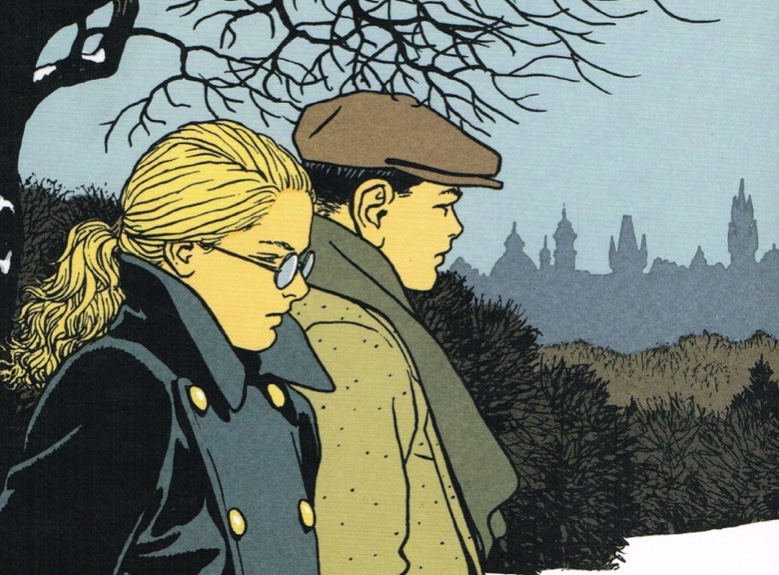
Vittorio Giardino, then, is this blend of sometimes flamboyant elegance and restraint, of cruelty and kindness, of historical honesty and simplicity. A cultured and desiring author of a sensitive and complex body of work.
◆
In 2003, again with Casterman, Giardino would publish a new collection of similar stories titled « Voyages de rêve », rather successful but with a bit less bite and a bit more graphic conservatism. ↩︎
Interview by Christophe Quillien (Bo Doï magazine #116, 2008) ↩︎
« Vittorio Giardino : virée en BD dans les heures enfiévrées du printemps de Prague » in Télérama (2018) ↩︎