
Since 1982, the Hernandez brothers—Jaime, Gilbert, and, on rare occasions, Mario—have published Love and Rockets in the United States through Fantagraphics.1 Gilbert became famous for the world he built around Palomar, an imaginary Mexican village. His near-mythological exploration of the place has drawn many comparisons with Colombian writer Gabriel García Márquez's One Hundred Years of Solitude; his focus on childhood recalls Mexican filmmaker Luis Buñuel's Los Olvidados. Jaime created Maggie Chascarrillo and Hopey Glass, iconic figures in « alternative » comics culture—with its Latino roots in Los Angeles and punk-rock influences—and followed their lives from adolescence into middle age in the Locas series.
The brothers are widely recognized as major figures in the realist current of American comics. The earliest Love and Rockets issues include some science fiction (notably Gilbert's Bem), but by their own account, the Hernandez brothers soon preferred to focus on ordinary people. More love than rockets. For more than 40 years (and counting!), 93 million miles from the sun2, they have built a major body of work, remarkably cohesive yet impressively capable of renewal, opening up new perspectives while also creating a repeated sense of fulfillment.
The days when Gilbert was considered the better writer and Jaime the better artist are long gone. Each has developed a distinctive style of great visual beauty (they work almost exclusively in black and white) and a subtle, moving, expansive, and novelistic approach to storytelling. The elder brother influenced3 the younger: Gilbert was the first to attempt long, structured narratives, with Jaime following suit in Wigwam Bam:
« But why have two authors on one book? Then we explain: because there are two of us. »Jaime Hernandez
The education of Jaime
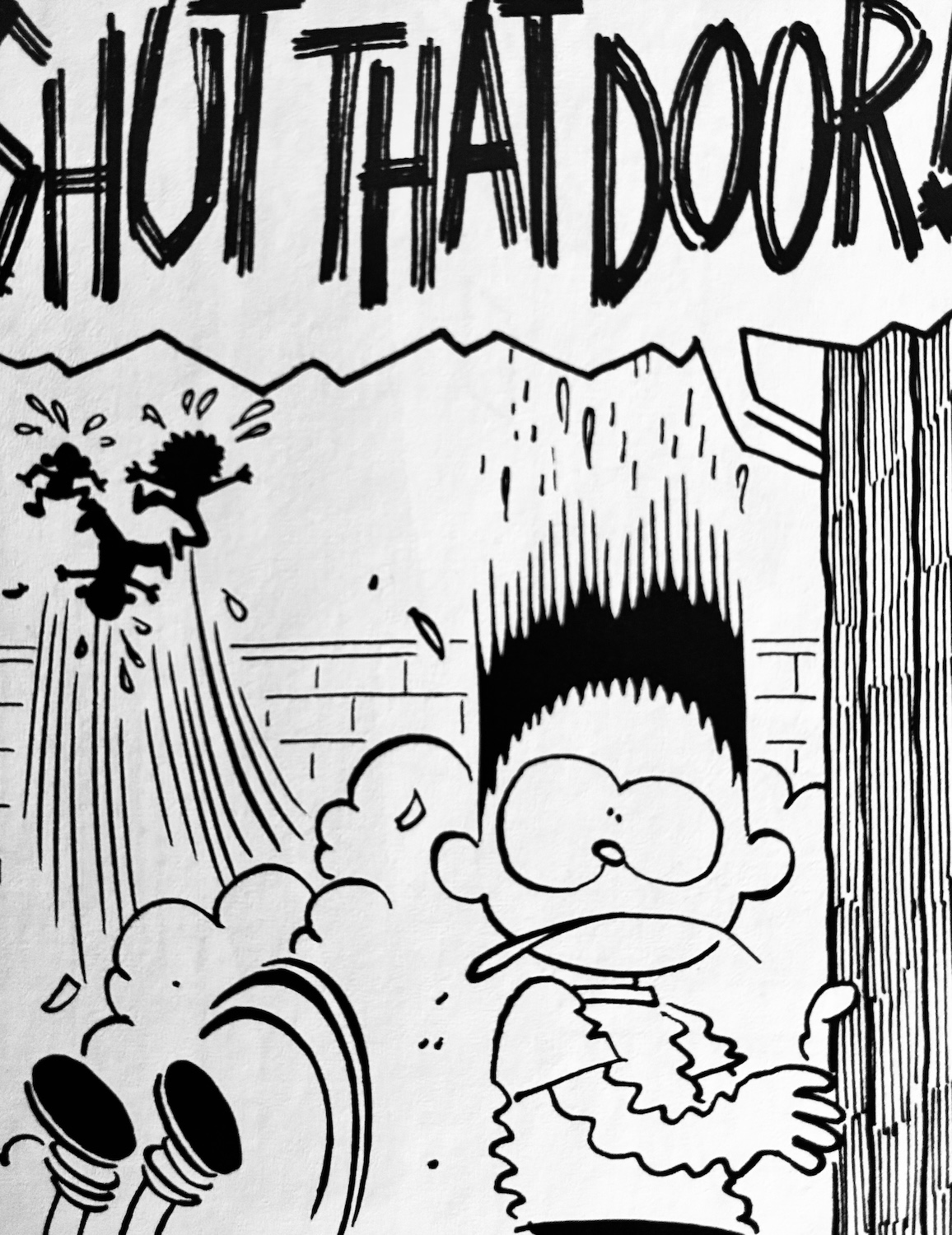
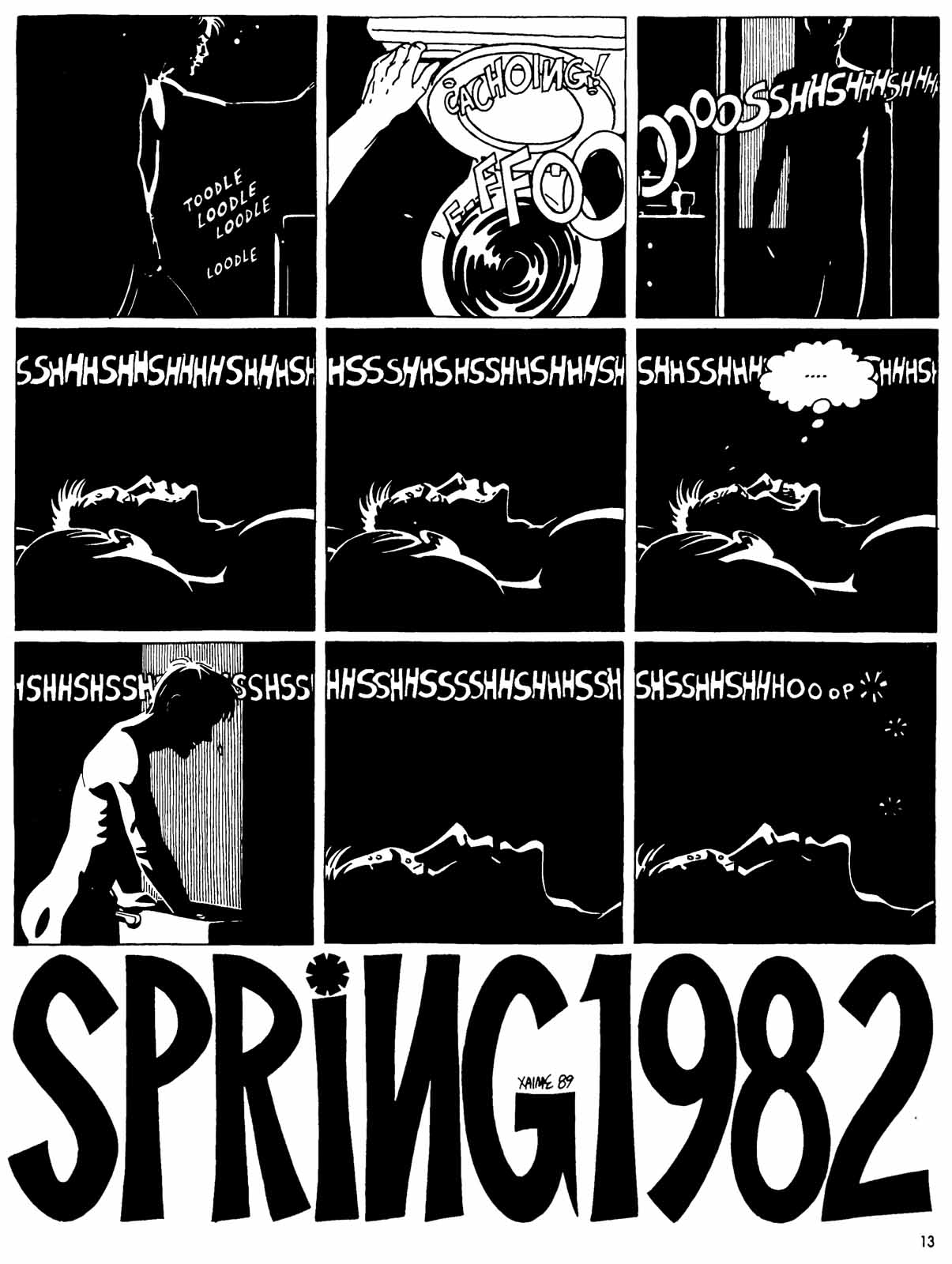
For Jaime, The Death of Speedy, Spring 1982, and Flies on the Ceiling, followed above all by Wigwam Bam, Chester Square, Penny Century, Ghost of Hoppers, The Education of Hopey Glass, and The Love Bunglers (perhaps his finest work) are creative peaks. Published between the mid-1980s and the 2010s, these works depict complex relationships and characters who are at once straightforward and mysterious. Jaime is unafraid to let them age and face different challenges over time: death, bodily change, social concerns...
Like Gilbert, he also portrays outsiders while maintaining an egalitarian perspective: their marginality is never the focus of the story, but rather a characteristic as incidental—and as defining—as the color of their eyes or hair.
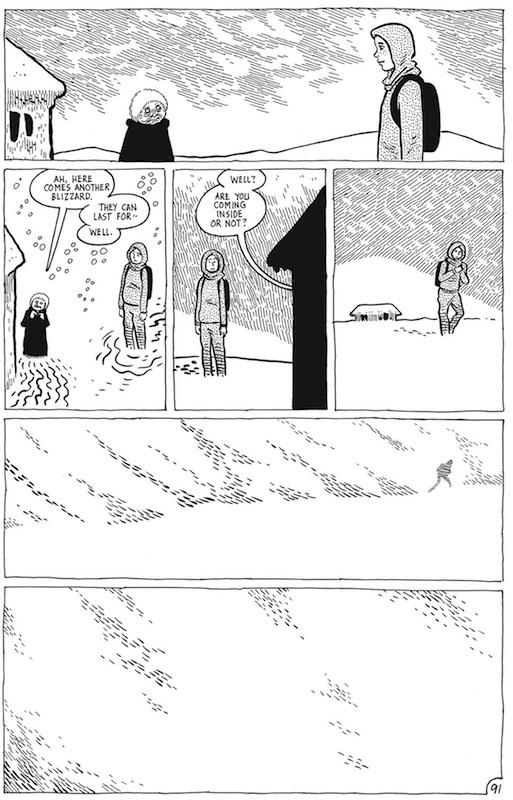
Jaime makes powerful use of what is left unsaid (in several of his works, it is not easy to pin down their true subject, leaving room for interpretation) and depicts an America that is sometimes deviant and perverse, yet profoundly human. He explores the relationship between Maggie and Hopey, both idealized by outside observers and deeply rooted in the realism of everyday life. Jaime has something of Jarmusch and De Sica, but just as much of Charles M. Schulz and Alex Toth.
In the process, his style becomes more refined, pared down to the necessary lines without losing depth. It retains a sense of lightness and innocence while focusing on what matters.
Beto of Palomar
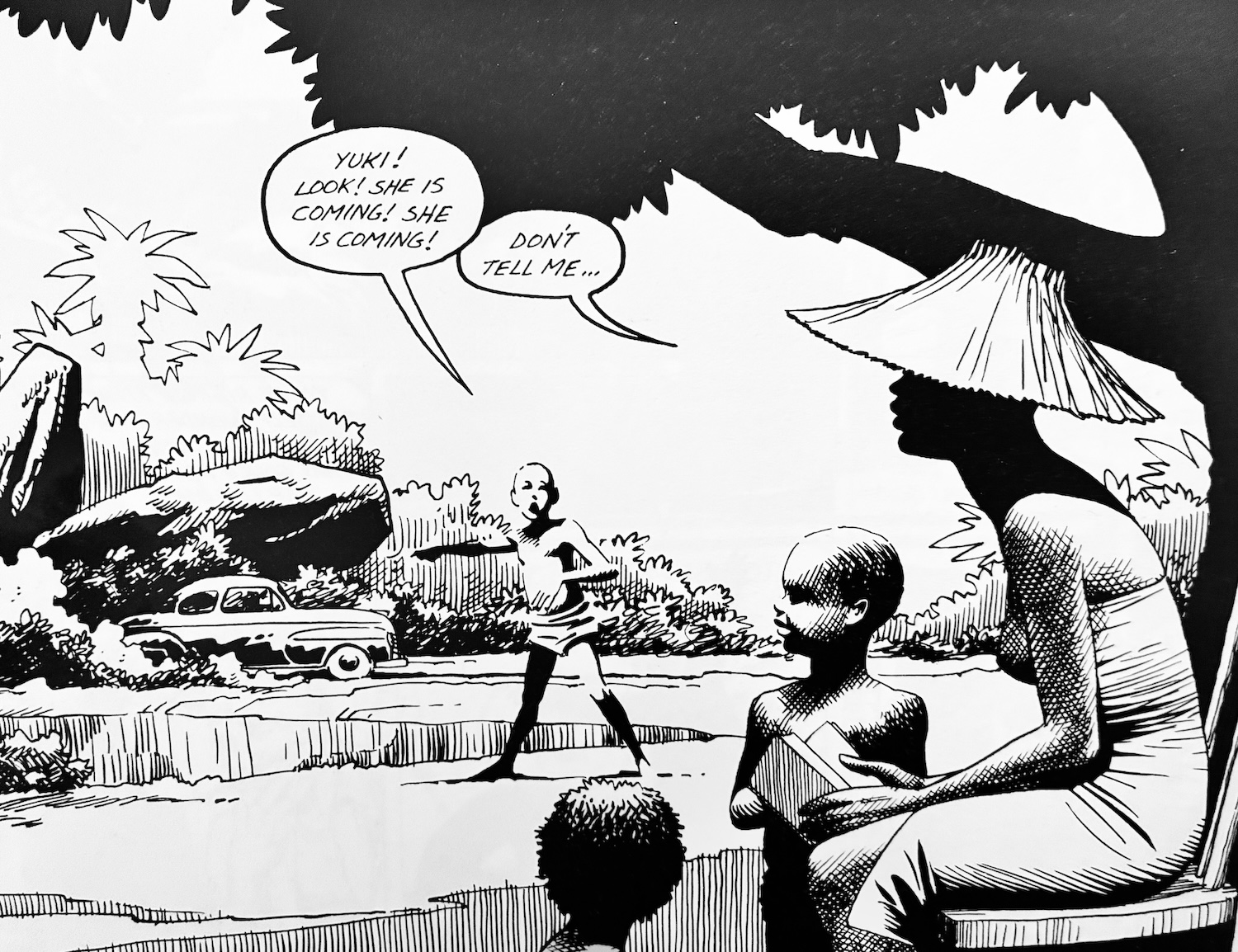
Gilbert Hernandez, known as Beto, stands out above all for his command of fragmented storytelling. His Palomar stories span several decades of diegetic time and unfold nonlinearly, yet without a hint of inconsistency or psychological implausibility. More than that, Gilbert gives us the impression (perhaps a true one) that the underlying story of his work was mapped out in advance. He deftly revisits seemingly ordinary situations, offering different perspectives on them in separate stories (see Heartbreak Soup and then Act of Contrition, for example). His gift for characterization is especially evident in Holidays in the Sun—a depiction of prison life on an internment island—and The Laughing Sun.
With Human Diastrophism (collected in Blood of Palomar), Gilbert entered his most creative period. It was followed by Frida, a remarkable portrait of the Mexican artist Frida Kahlo; Love & Rockets X; and, of course, Poison River, a timeless saga of staggering richness and depth, a kind of origin story for Luba, a central character in his universe, before she settles in Palomar at the start of Heartbreak Soup.
Poison River operates on several levels of meaning, interweaving plot and psychological portraits while covering an impressive range of themes—roots, socialism, repression, illness, organized crime, fetishism, transgender identity...—at a pace that is both swift and fluid.
An all-encompassing, expansive saga reminiscent of Mario Puzo's The Godfather, it is one of those comics that can be recommended well beyond the usual circle of enthusiasts: the medium itself fades away before the power of the storytelling.
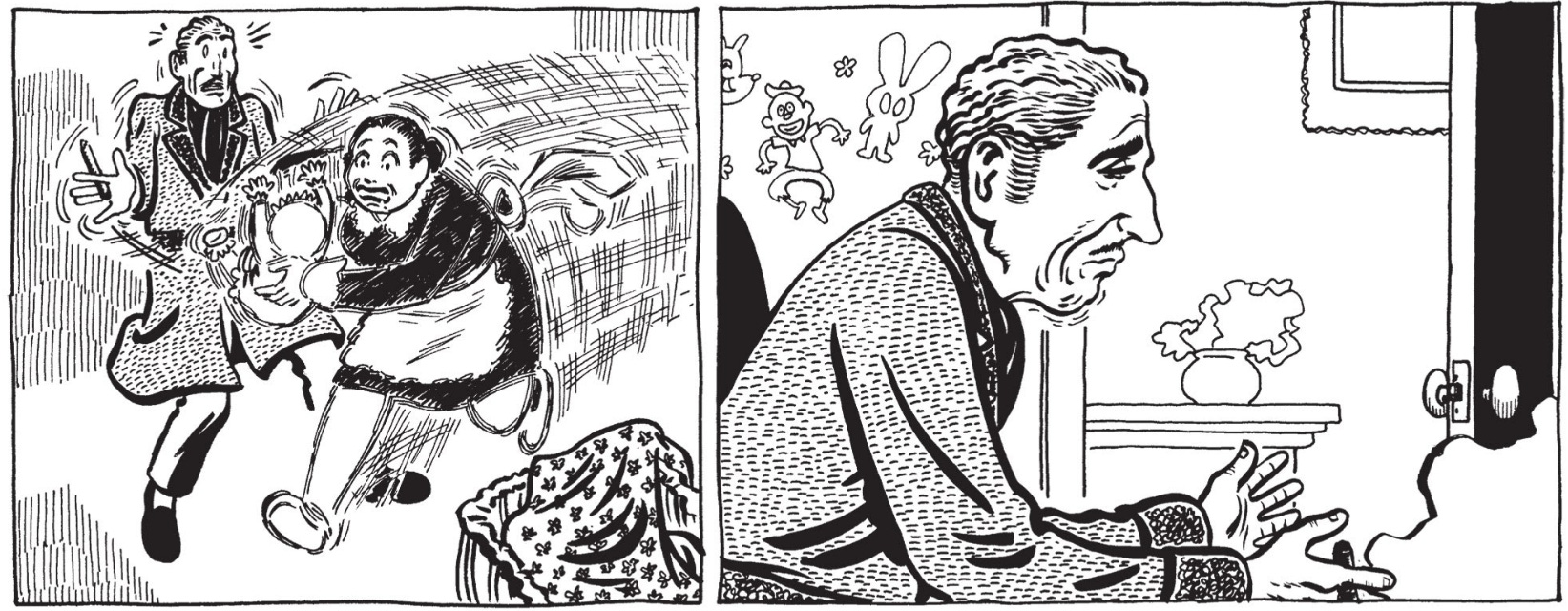
And yet this is very specifically a work of comics; adapting it to another medium would require radical shifts in point of view. The opening pages are an excellent example. In the version published in Love & Rockets #29 in 1989, the story's four-page introduction contained no speech bubbles. The collected edition adds a few, but countless events and emotions are still conveyed in this introduction with (almost) no words.
One might argue that cinema could achieve a similar effect, but that would overlook the unique power of still images, which give the panels—and the events and sensations they depict—a fascinating persistence. Still images have, of course, also been explored in cinema, for instance in Marguerite Duras's India Song and the work of Chris Marker.
Other works include Luba, The Book of Ofelia, Three Daughters, and Julio's Day... There are also books outside Love & Rockets, such as Sloth, and experiments like the quasi-pornographic Birdland, whose baroque style nonetheless invites questions about Beto's obsessions.
In early 2027, a 34th Love & Rockets collection, Love and Rockets Vol. IV - Book One, is due from Fantagraphics Books. In France, the Hernandez brothers remain little known and rarely discussed. The universal quality of their stories is probably not the issue—although cultural markers are present, they never dominate. More likely, the sheer volume of their work and the chaotic publication history of its French editions have played a part. The brothers' use of ellipsis and highly visual storytelling may also take some getting used to for a general audience.
And yet it is easy to be swept along by their stories, moved by their characters, and charmed by their high-contrast black-and-white artwork, as well as by their absolute command of comics' rhythm and balance.
◆